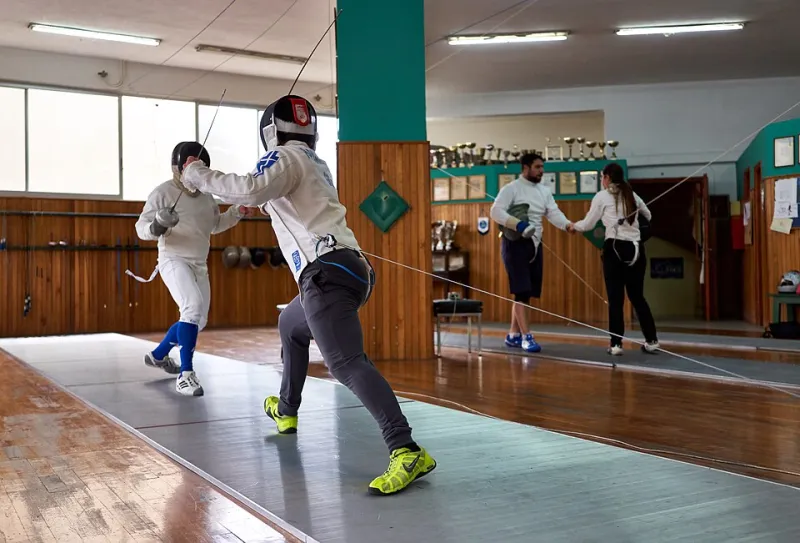
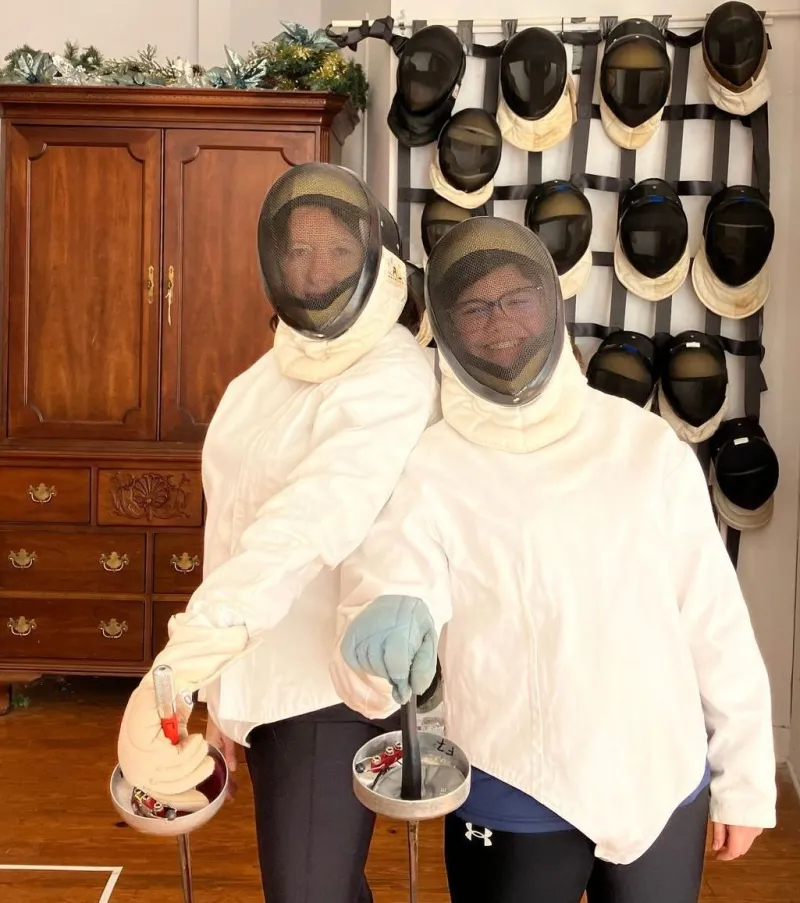
The Case Nobody Makes at the Soccer Field: Why Fencing Might Be Houston's Smartest Youth Sport
Photo: Internet Archive Book Images, No restrictions, via Wikimedia Commons
Drive through any Houston suburb on a Saturday morning and you'll see it: fields packed with soccer players, baseball diamonds humming, parents huddled under tents trying to escape the sun. Youth sports here are big business. But if you're a parent weighing where your kid's time and your money should go, there's one option that rarely gets a fair shake at the decision table.
Fencing. Yes, the one with the swords.
We run a fencing club, so you'd expect us to say this. But stick with us for a few paragraphs — the numbers and the logic might surprise you.
The Recruiting Math Nobody Talks About
Here's something youth football and baseball coaches won't bring up at the parent meeting: the odds. Roughly 1 million high schoolers play football in the US each year, competing for around 19,000 NCAA roster spots. Soccer and baseball follow similar brutal ratios.
Fencing? There are fewer than 300 NCAA programs nationwide, but the pool of high school fencers is tiny by comparison — a fraction of a percent of the athletes competing in mainstream sports. In practical terms, a dedicated fencer with solid national-level results is far more likely to catch a college coach's eye than a third-string midfielder on a crowded roster.
Schools like Notre Dame, Columbia, Penn State, and Stanford recruit fencers actively, and because many programs are co-ed or have full women's squads, the scholarship pipeline for girls is especially strong. If your kid loves a sport and you'd love help paying tuition, that ratio matters.
Houston Weather Is a Training Problem. Fencing Doesn't Care.
Anyone who's shivered through a February baseball rainout or watched a July soccer practice get cut short knows the drill. Houston's climate is hostile to outdoor youth sports: 90-degree Septembers, hurricane-season chaos, sudden downpours that cancel games with no makeup dates.
Fencing happens indoors, in air conditioning, on our schedule. No lightning delays. No heat index warnings. When Hurricane Beryl knocked out power across the region in 2024, our fencers were back on the piste as soon as the club reopened — training while outdoor leagues scrambled to reschedule entire seasons.
That consistency compounds. Year-round, uninterrupted training is how skills actually develop, and it's a structural advantage outdoor sports in Southeast Texas simply can't offer.
One Kid, One Blade, Total Accountability
Team sports teach valuable lessons — we won't pretend otherwise. But they also let a kid hide. A young soccer player can coast through a match touching the ball a handful of times. A right fielder can go a whole season without a play coming their way.
On the fencing strip, there's nowhere to hide. Every touch scored on you is yours. Every touch you score is yours too. Kids learn fast that preparation, focus, and composure are the whole game — and when they lose, they learn to analyze why without blaming a teammate or a referee.
Then there's the strategic layer. Fencers call it "physical chess," and the nickname holds up. You're reading an opponent, setting traps, adjusting tactics mid-bout. Studies on combat sports and cognitive development suggest this kind of real-time decision-making supports executive function — the same mental machinery kids use in math class and standardized testing.
"We pulled our son from club soccer because he was warming the bench," says Maria G., a Katy mom whose daughter and son both fence with us. "Within six months he was competing — actually competing — and his confidence at school changed completely. His sister saw it and joined too."
James T., a parent from the Heights, puts it more bluntly: "In baseball, my daughter was one of thirty kids. In fencing, the coach knows exactly what she needs to work on every single week. There's no hiding, and honestly, that's why she's improving."
Let's Talk Money
Youth sports in Houston are expensive no matter which way you go, but the numbers vary wildly:
- Select soccer: $2,500–$5,000+ per year in club fees alone, plus travel tournaments across Texas.
- Select baseball: Often $3,000–$6,000 annually once you add private lessons, gear, and facility rentals.
- Football: Equipment-heavy, with private QB and skills coaching pushing committed families well past $2,000 a year.
- Fencing: Beginner programs typically run $150–$250 per month including group classes, and starter gear packages run a few hundred dollars — and that gear lasts years. Competitive fencers who travel nationally will spend more, but the entry ramp is genuinely affordable, and many clubs (including ours) loan gear to new students.
The key difference: fencing costs scale with your ambition. A recreational fencer can train twice a week for less than the cost of one season of select soccer.
It Doesn't Have to Be Either/Or
We're not telling you to burn your kid's cleats. Plenty of our fencers play other sports, and the athleticism transfers beautifully — footwork, reaction time, and hand-eye coordination carry over to everything.
But if you're choosing one activity, and you want one that builds an individual competitor, sharpens the mind, survives a Houston summer, and opens a legitimate — if uncommon — path to college recruitment, the smartest sport in this city might be the one with the mask and the blade.
Come see a class. We promise the first touch is more fun than it looks.
Ready to try it? Houston Fencing Alliance runs beginner courses for kids and adults year-round — no experience or gear required. Check our class schedule and bring the family by.