Talk the Talk: Five Fencing Words That'll Make You Sound Like a Pro After Your First Month
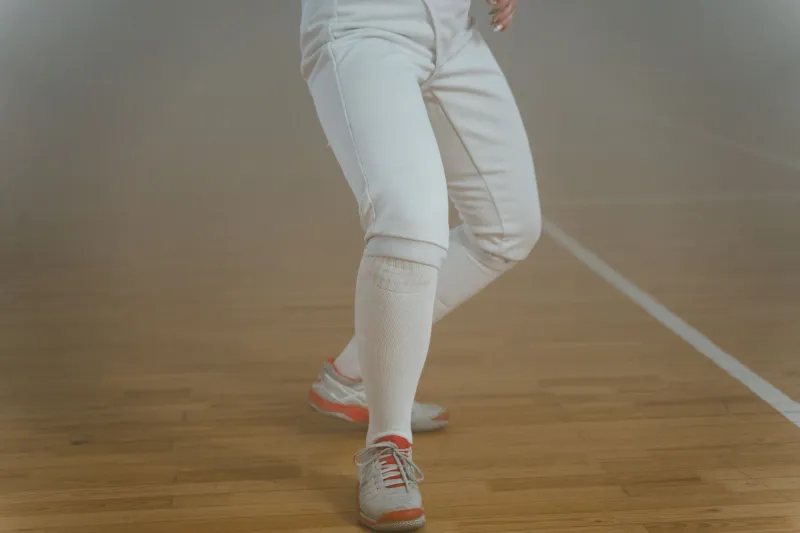
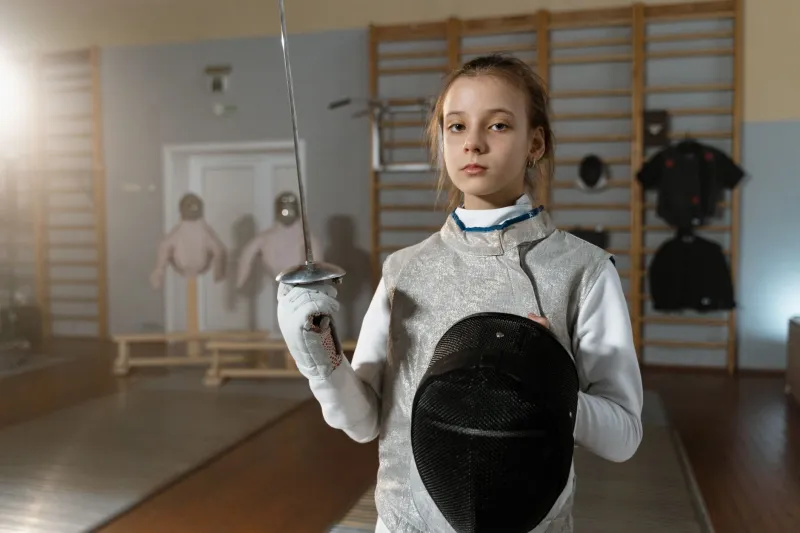
Every sport has its jargon, but fencing might take the cake. Where else can you threaten someone with a 'flèche,' escape danger with an 'in quartata,' and celebrate your victory by yelling 'Halt!' at nobody in particular?
Here's the thing, though: the vocabulary isn't there to gatekeep. It's there because fencing is old — centuries old — and the language carries that history with it. And the best part? You don't need years of training to start tossing these terms around. One month of beginner classes at our Houston club and you'll have earned every one of them.
1. Ballestra: The Jump That Says 'I Mean Business'
Pronounced bah-les-trah, this one's a favorite among our younger students because it sounds like a dance move and basically is one. A ballestra is a quick, aggressive jump forward — usually combined with a lunge — designed to close distance fast and rattle your opponent.
Think of it as the fencing equivalent of a jump scare, except your opponent is wearing full protective gear and a mask, so the rattling is purely psychological. It's flashy, it's fun, and yes, it feels as dramatic as it sounds when you land it correctly on the strip.
2. In Quartata: Dodging by Doing the Absolute Most
The in quartata (sometimes written inquartata) is fencing's answer to the question, "What if I dodged the attack by rotating my whole body sideways?" Instead of retreating, you pivot on your front foot and turn your torso away from your opponent's blade — while simultaneously extending your own point toward them.
It's a defensive counterattack, which means it's equal parts elegant and mildly absurd-looking from the outside. When a new fencer pulls one off for the first time in class, we usually hear about it. Loudly.
3. Flèche: Running at Your Opponent, But Make It Fencing
Flèche is French for "arrow," and the move lives up to the name. It's an all-out attacking sprint where you cross your back leg in front of your front leg and launch yourself down the strip at your opponent.
Here's the catch: it's a committed attack. You're leaving your defensive position entirely, so if it misses, you're in trouble. That risk-reward balance is exactly why the flèche is one of the most exciting moves to watch in a bout — and why our students get a little obsessed with perfecting it around week three or four.
4. Riposte: The Comeback, Literally
If you've ever heard someone describe a witty comeback as a "riposte," this is where it comes from. In fencing, a riposte is the counterattack you make immediately after parrying (blocking) your opponent's attack.
The rhythm of it is what hooks people: attack, parry, riposte. It's a conversation at blade-point, and the riposte is your rebuttal. New fencers tend to learn this one early because it's fundamental to how the sport actually works — and because nothing beats the satisfaction of turning someone's attack into your point.
5. Salute: The Only Rule of Etiquette You Can't Skip
Okay, this one's less of a move and more of a ritual, but it's the term you'll use most. Before and after every bout, fencers salute — with their mask and their blade — as a sign of respect. It's non-negotiable, it's old-fashioned in the best way, and it's one of the first things we teach in every beginner class at Houston Fencing Alliance.
In a sports landscape that could use more of it, the salute is a small tradition that reminds everyone: we're here to compete hard, not to be hostile.
Come Earn Your Vocabulary
Here's the honest truth: reading about fencing terms is like reading about swimming. The words only really click once you're moving on the strip with a blade in your hand and a coach calling out corrections.
Our beginner programs run year-round at our Houston facility, and no — you don't need to memorize anything before you show up. We'll teach you the lingo as you go, and within a month, you'll be the person at the dinner table casually mentioning your ballestra like it's no big deal. (It is a big deal. We're proud of you.)
Check out our class schedule, grab a spot in the next beginner session, and come find out what the rest of the vocabulary sounds like from inside a mask. En garde, Houston — the piste is waiting.