Late Bloomers on the Piste: Houston Adults Are Rewriting the Fencing Age Curve

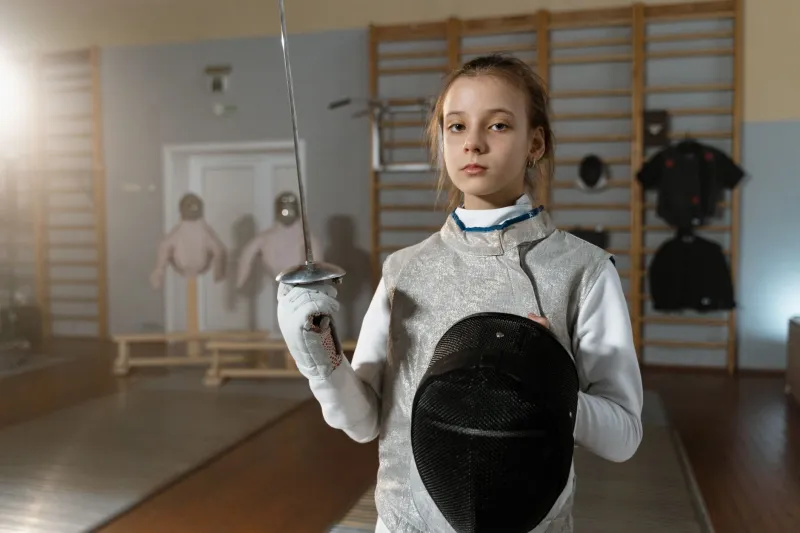
Photo: adult beginner fencing class indoor gym fencing masks foils Houston, via as2.ftcdn.net
Ask most Houstonians to picture a fencer and they will summon a teenager in white, moving like a caffeinated chess piece. The reality in 2026 is messier and more interesting. On any given weeknight, you can find project managers, nurses, engineers, and parents of middle-schoolers shuffling through footwork drills in Houston fencing clubs — many of them holding a weapon for the first time since a childhood Olympics phase that lasted exactly two weeks.
The adult beginner is not a niche anymore. Coaches around the city say the 30-and-up crowd has become one of the steadier parts of their introductory classes. Some are former high school athletes looking for a competitive outlet that does not involve a weekend-long softball tournament. Others simply want a workout that does not feel like punishment. Fencing, it turns out, scratches both itches without asking anyone to run a 5K in July humidity.
The 43-year-old who traded spin class for salle
Marisol, a project manager who lives near the Heights, started fencing in early 2026 after a decade of gym memberships that she describes as expensive donations. She liked the idea of cardio. She did not like the idea of another 45 minutes staring at a wall of televisions.
Her first class was humbling in the best way. There was no sprint test. There was a warm-up, a lesson on how to stand, and a lot of walking forward and backward in a line. By the third week, she was doing simple blade drills with a partner. By the sixth, she was bouting — fencing live, with a referee and everything — and laughing at how much thinking it required.
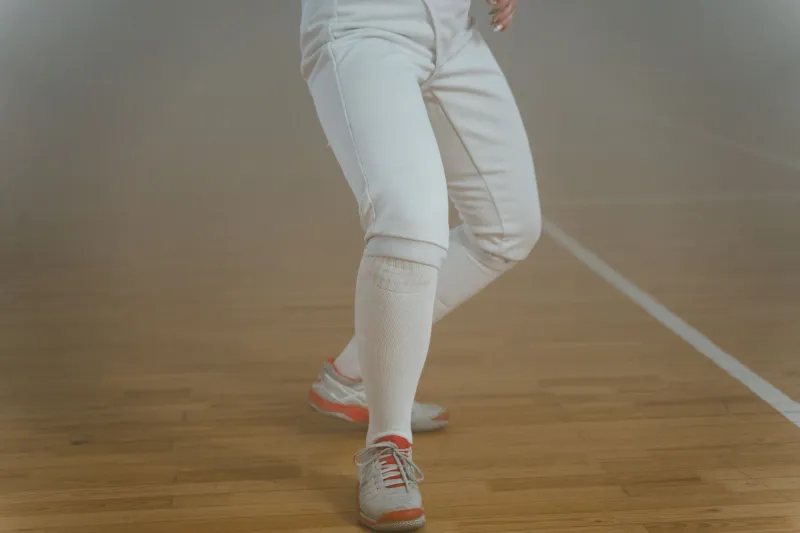
What surprised her was the burn. Not the gasping, I-might-die burn of a boot camp, but the deep-leg fatigue that comes from holding a proper stance and changing direction again and again. Fencing is often described as physical chess, which is true but incomplete. It is also interval training with a ruleset. You explode for a few seconds, recover, think, explode again. The stop-and-go rhythm is a big reason adults who hate steady-state cardio tend to stick with it longer than they expect.
The Katy dad who needed a screen-free hour
Dev, 38, is a father of two who drives in from Katy once a week. He signed up because his son was curious about fencing and he did not want to be the dad who sat in the car scrolling. He figured he would take a few classes, learn the basics, and hand the sport off to the kid.
Instead, he got hooked. His son quit after two months. Dev kept showing up.
His favorite part is the mental reset. Fencing requires enough attention that you cannot mentally rehearse tomorrow's meeting while doing it. You have to watch your opponent's hand, manage distance, and make decisions in real time. For a guy whose job is basically a cascade of notifications, that forced focus has become its own kind of break.
How adult beginner classes actually work
If you are picturing a room full of teenagers who started at age seven and move like they were born holding a saber, relax. Good adult beginner programs are built differently. Coaches know that grown-ups arrive with different bodies, different schedules, and different tolerances for looking silly.
At Houston Fencing Alliance, adult intro classes tend to follow a few practical rules. Warm-ups are joint-friendly and scaled to the group. Footwork is taught in small doses, with plenty of rest and water breaks. Bouting is introduced gradually — first with restricted targets, then with simple rules, then with full electric scoring once people are ready. Nobody is thrown into a full-speed bout on day one, and nobody is expected to already be fit.
That last point matters. Adult beginners often worry they need to get in shape before starting fencing. In practice, the sport is the shape-up. The first few weeks are about learning to move efficiently, not about surviving a fitness test. Coaches routinely adapt drills for people with cranky knees, old ankle injuries, or desk-job shoulders. The goal is to build a fencer, not to weed people out.
Equipment is another low-stress part of the equation. Beginners usually start with club gear — mask, jacket, glove, and weapon — so there is no immediate shopping list. Once someone decides to stick with it, they can buy their own gear at their own pace. That low barrier to entry is one reason adult fencing has spread beyond the usual competitive pipeline.
The treadmill problem
Let's be honest about why a lot of adult fitness routines collapse. The treadmill is boring. The elliptical is boring. Even a good gym can feel like a room where time goes to die. Fencing is not boring. It is unpredictable in a controlled way. You are solving a problem with your body while someone else tries to solve a problem with theirs.
That unpredictability also makes it easier to keep showing up. Adults who fence regularly talk less about calorie burn and more about the puzzle. They like learning a skill that has visible progress. They like that a 52-year-old can be competitive with a 32-year-old because technique and timing matter as much as raw speed. They like the fact that a bad day at work does not follow them onto the strip — or piste, if you want the fancy word.
A social life that does not require small talk
There is also the community angle, which is easy to undersell. Adult beginner classes tend to be small enough that people learn each other's names. You drill with a partner. You bout with a partner. You learn to read each other's habits. That shared problem-solving creates a kind of low-pressure camaraderie that is hard to find in a group fitness class where everyone faces the instructor and leaves without saying much.
In Houston, that matters. We are a big, spread-out city, and it is easy to go weeks without a real conversation outside work and family. A weekly fencing class gives adults a standing appointment with people who are not coworkers or relatives. It is social without being a networking event. It is competitive without being cutthroat.
Starting without overthinking it
If you are 35, 45, or 55 and curious, the first step is smaller than you think. Find an adult beginner class. Wear athletic clothes. Bring water. Expect to be clumsy for a few weeks. Expect your legs to feel it. Expect to leave with a little more energy than you came in with.
The 40-year-old beginner is not an anomaly in Houston anymore. They are the person on the piste next to you, learning the same footwork, making the same mistakes, and coming back next week anyway. That is not a fitness secret so much as a quietly good habit. And in a city with plenty of treadmills, it is nice to have another option.