The Unwritten Job: Why Houston Fencing's Real Leaders Never Get a Title
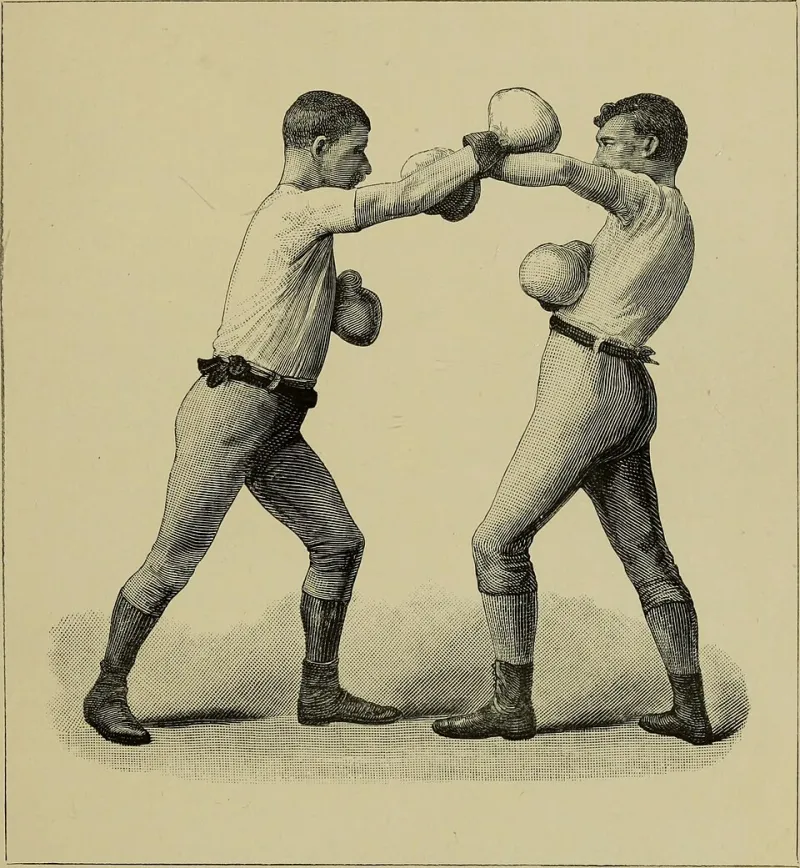
Photo: Internet Archive Book Images, No restrictions, via Wikimedia Commons
Walk into almost any fencing club in Houston and you can find it in about thirty seconds.
Not the trophies on the shelf. Not the coach's credentials on the wall. Something quieter: the way a veteran member notices the new face hovering by the equipment rack and says, "First class? Here, this rack's yours for the night — I'll show you where the lefty gloves are."
That's the job nobody hires for. And it's the single biggest difference between a club that grows and a club that slowly empties out.
A Title Isn't Leadership
Some clubs have a captain. Some have a board, or a team manager, or a designated armorer who knows where the spare tips live. Those roles matter, and somebody has to do them.
But the actual leadership of a fencing club — the thing that determines whether a room feels like a place you belong — is distributed across twenty small, uncredited acts a night. Nobody assigns them. Nobody evaluates them. They just happen, or they don't.
Here's the argument: if we want Houston fencing to keep getting stronger, we should stop treating those acts as background noise and start treating them as the core skill of an experienced member.
What the Job Actually Looks Like
It doesn't look like a speech. It looks like this:
- Sitting out a rotation so a beginner gets partners instead of standing alone.
- Noticing that a young fencer's grip is the wrong hand size and quietly mentioning it to the coach rather than letting the kid struggle for another month.
- Calling a touch on yourself when you know the refereeing is thin and the honest answer is against you.
- Showing up a few minutes early because the class before yours always has stragglers.
None of that gets a title. All of it holds a club together.
Welcome the Person in the Doorway
The hardest minute of any new fencer's life is the one spent standing just inside the door, bag in hand, deciding whether to walk further in.
Veterans forget this. They've been in the room so long it stopped being intimidating. But the memory of being new fades fast, and the longer you fence, the more use you are when you get it back.
The move is simple: introduce yourself by name, ask what they're fencing, and point them at something concrete. "There's a bench there — put your bag down. We start with footwork, and the coach will pair you up." That's it. You've just doubled the odds that person comes back next week.
One caution worth naming: welcome isn't the same as insta-coaching. A new fencer who gets seven pieces of advice in their first five minutes will hear none of them. Answer questions you're asked. Save the rest.
Model the Strip, Don't Lecture It
Every club claims to value sportsmanship. Very few have to say it out loud, because the culture does the teaching.
If the experienced fencers salute, shake hands, and say "good bout" even after a flat loss, the younger fencers learn that without anyone writing a rule. If the experienced fencers argue calls, sulk, and slam the mask down on the bench, the room learns that instead — faster and more thoroughly than any orientation session could ever teach.
So the concrete ask is small: on the strip, be the behavior you want the eleven-year-olds to copy. Especially when you're tired, and especially when the call went against you.
Keep the Room Sharp Without Making It Cold
This is the delicate one, and it's where clubs break in two directions.
Too soft, and practice turns into a social hour where nobody's actually getting better and the competitive members quietly leave. Too hard, and the room becomes a place where beginners feel like they're intruding and the new members never make it to their second month.
The balance isn't mysterious. It's a habit of separating the person from the performance. You can hit somebody hard in a bout and still be the one who greets them by name in the parking lot. You can tell a training partner "that was fast, do it again" without making it a verdict on their worth.
Practically, that means three things veterans can do on any given night: give real effort in practice bouts, including against less experienced partners who will learn more from your honest speed than your pity; say out loud what you're working on when you drill, so beginners can see that improving is a process, not a talent; and be generous with the small verbal cues — "nicely done," "you're dropping your point" — that cost you nothing.
Pass It On Before You're Asked
There's a habit in strong clubs that deserves to spread: the experienced fencer who brings someone else along.
Not formally mentoring — just taking an interest. Inviting the same nervous beginner to be your warm-up partner for a few weeks. Answering the question about when to buy their own gear. Explaining what actually happens at a local tournament, in plain language, without a lecture on the rulebook.
This is how a club's knowledge stops living in three people's heads. It's also how a beginner becomes a regular, and a regular becomes the person greeting the next person in the doorway two years later.
The return on this is not abstract. It's the reason a club can lose its most experienced member to a move out of state and not fall apart.
Why It's Worth Doing
Fencing in Houston is still a small enough world that reputation travels. The fencers people remember, years later, are rarely the ones with the best record. They're the ones who made the room feel like it had space for them.
That's not a title. It's a job. And the good news is that it's available to anyone who's been around long enough to remember being new.
En garde, Houston.