Left Is Right: A Houston Fencer's Field Guide to the Southpaw Game
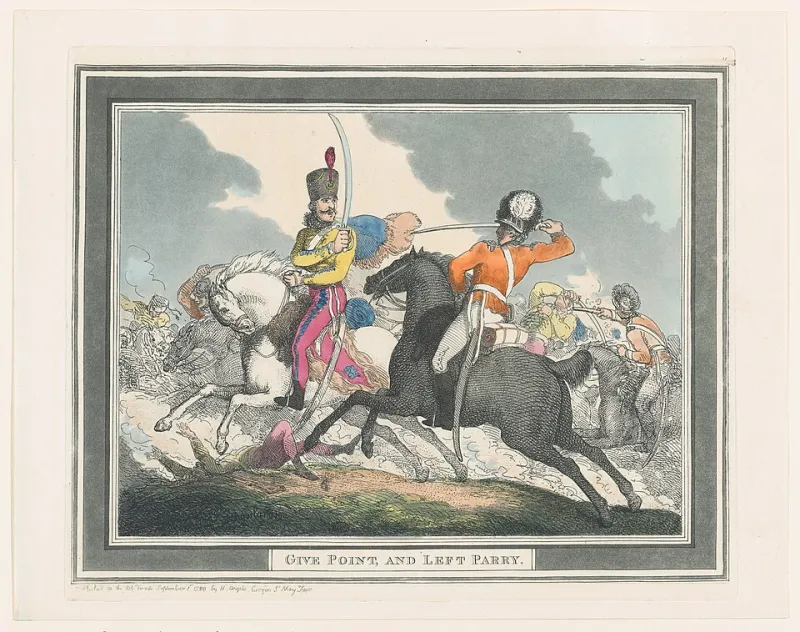
Photo: Thomas Rowlandson / Henry Angelo, CC0, via Wikimedia Commons
Fencing is a game of angles, and in Houston — like everywhere else — most of those angles were built by and for right-handers.
About one in ten people is left-handed. On a strip, that number feels like it should be higher, because the left-handed fencer isn't a mirror image of everyone else. They're playing a different game under the same rules, and almost nobody explains that to them in the first month.
If you're a southpaw who just walked into a beginner class, or a parent whose kid announced over dinner that they're fencing lefty, this is the guide nobody hands you at the door.
The Geometry Problem Nobody Warns You About
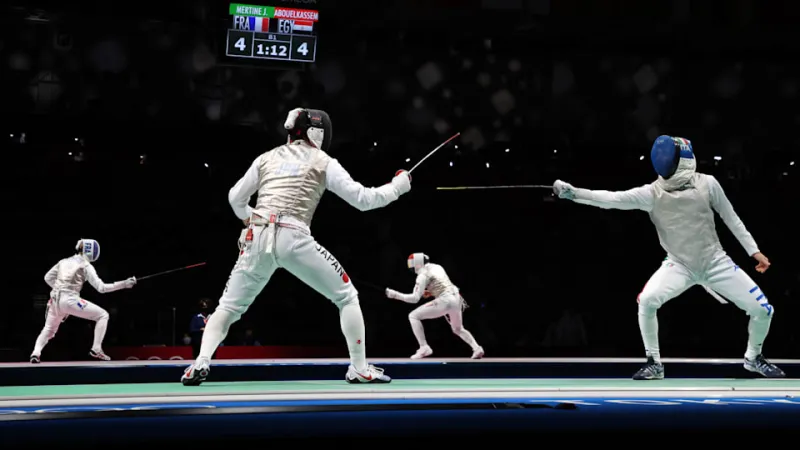
When two right-handers face off, their weapon arms sit on opposite sides of the strip. When a lefty meets a righty, both weapon arms are on the same side. That single fact reshapes everything: the lines that are normally safe become open, the bell guards crowd each other, and the footwork timing that both fencers drilled for years suddenly doesn't line up.
A right-hander who has spent two seasons learning to close one line will discover that against a lefty, the line they were protecting isn't the one under attack. The attack arrives from a direction their body doesn't instinctively cover.
That's not a trick or a gimmick. It's just geometry — and it's the reason lefties punch above their weight in local pools.
Gear: Small Differences, Big Consequences
The good news first: masks, jackets, plastrons, breeches, and lame jackets are all ambidextrous. You are not buying a whole second wardrobe.
The rest of the list is where lefties get tripped up:
- The glove. Left-handed gloves are a separate product, not a flipped one. The gauntlet and seam placement are cut for the other hand. A right glove on a left hand will rub you raw within a month.
- The bell guard. The guard is offset to cover the hand, which means left and right guards are genuinely different parts. Mixing them up produces a weapon that feels cursed and you won't know why.
- Pistol grips. Molded grips are handed. A right-handed pistol grip in a left hand is a fast route to wrist pain and sloppy point control.
- Sabre. Less dramatic than foil or épée, but the grip and guard orientation still matter when you order.
- Club loaner bins. This is the big one. Most clubs stock loaner gear in a right-handed ratio, which means the lefty bin runs dry first. Call ahead before your first class and ask what left-handed equipment is available in your size.
One practical habit: label everything. Left-handed gear is the first thing to vanish from a shared equipment room, usually because someone grabbed it in a hurry without checking.
The Real Advantage — and Its Expiration Date
Southpaws hear "you're so lucky" constantly, and the eye-roll is earned. But there is a genuine edge, at least early on: most of your opponents see a left-hander maybe once a month. You see right-handers every single practice. Over a season, that asymmetry compounds.
Where it stops being an advantage is at the top of the local food chain. Experienced fencers adapt within a few touches. If your whole game is built on the surprise, you'll plateau the moment you start fencing people who have seen it before. Treat the lefty angle as a foundation, not a strategy.
The Frustrations, Stated Honestly
- Partner scarcity. In a class of twenty, you might be one of two lefties. You'll spend most of your reps fencing people who don't know how to fence you, which limits how much you actually learn.
- Scripted drills. Plenty of drills in a beginner curriculum assume a right-handed attacker and a right-handed defender. Ask your coach to run the mirrored version — most will happily do it once they realize it's needed.
- The advice gap. Half the coaching cues you hear in your first year were written from a right-handed perspective. "Step in, close the line" means something subtly different for you. Ask for the translation.
- Being treated as a novelty. You are not a party trick. You're a fencer.
Drills Right-Handers Can Run to Become Better Partners
This is the part that rarely gets written down, and it's the part that matters most for club culture.
- Don't save the lefty for the last bout. Spend ten minutes of every practice against a southpaw, early, while you're still sharp enough to learn something.
- Drill the mirrored footwork. Walk the advance-lunge line against a lefty and pay attention to which foot leads the timing. It will feel wrong for a week and then it won't.
- Practice the crowded-guard exchange. Both weapons on the same side means engagements feel tighter and beats land differently. Ten minutes of parry-riposte from that arrangement is worth a month of guessing.
- Work your outside line. The target you're used to attacking may be the one that's protected. Ask your partner where their openings actually are, then drill that specific line.
- Ask before you coach. A lefty in your class has heard more unsolicited advice than you can imagine. "Want me to try something different this rep?" goes a long way.
What Houston Clubs Can Do Better
If you run a club, three small moves pay off fast: keep at least two left-handed gloves and two left-handed weapons in the loaner stock at all times; build mirrored versions into the standard drill set so coaches don't have to improvise; and pair lefties together occasionally. A lefty-versus-lefty bout is its own tactical puzzle, and most southpaws never get to practice it before it shows up in a pool.
The left-handed fencer is not a problem to be accommodated. They're a competitor with a different map of the strip. Give them the gear, the drills, and the partners, and Houston gets a deeper, more interesting field for everyone.
En garde, Houston.